The Constant Cup
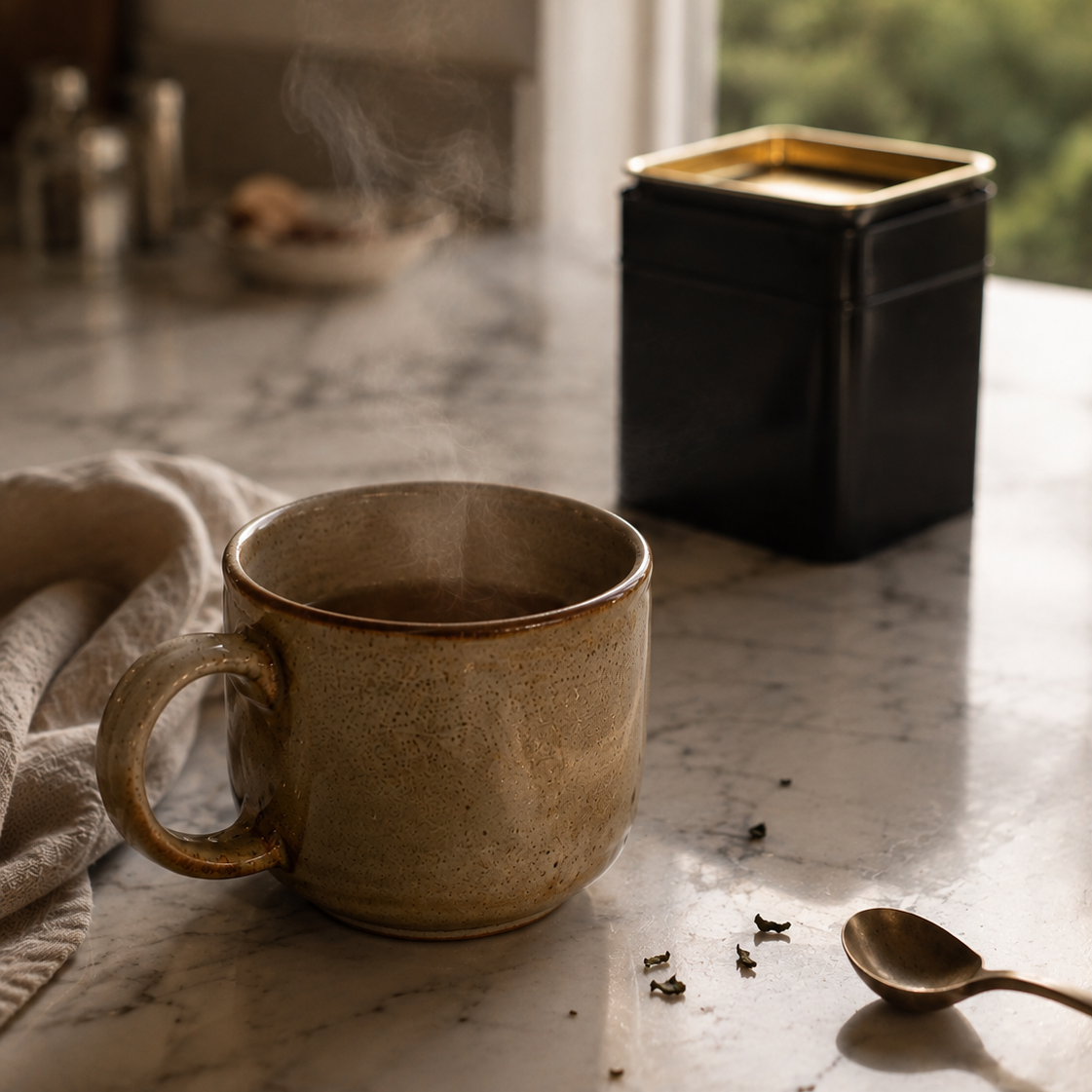
There are few circumstances in life for which tea feels inappropriate.
Wake up — tea.
An old friend at the door — tea.
A sadness without quite the right words — tea.
Four o’clock and dinner still some distance away — tea.
Bed, a dog curled close, the day finally loosening its grip — tea.
For something so simple, tea has acquired remarkable ceremony.
First cultivated in China thousands of years ago, tea travelled across continents and cultures, eventually taking deep root in India, where vast tea-growing regions and generations of chai wallahs transformed it into something distinctly their own. Tea leaves simmered with milk, sugar and spice became chai—less ceremony perhaps, but no less ritual. Poured from roadside stalls, offered in homes, shared between family and strangers: an everyday act of hospitality.
In Britain, tea found another identity. By the nineteenth century, afternoon tea had transformed the humble pause between meals into an occasion. Fortnum & Mason, Harrods and, later, The Ritz elevated it further: silver pots, fine porcelain, finger sandwiches, improbable little pastries. Pomp and splendour built around leaves steeped in hot water.
And somehow, none of it feels excessive.
There are memories of hours disappearing in the Harrods Tea Rooms with my husband, enveloped in that fantastical world where an ordinary afternoon is permitted to become an event. And of Alishan oolong—fragrant, delicate, capable of transporting with a single cup.
But tea needn't transport at all.
Sometimes it simply brings us back.
Earl Grey or Orange Pekoe in the late afternoon, a few biscuits bridging the distance to dinner. The first cup of morning, its warmth signalling to the body that the day has officially begun.
And perhaps loveliest of all, the final cup. Sipped in bed with the dog tucked close, becoming drowsier with every mouthful, willingly surrendering to sleep.
Grandiose or humble. Ceremonial or necessary. Celebratory, consoling, awakening, settling.
Across cultures and generations, through joy and grief, solitude and company, tea asks remarkably little.
Hot water.
Leaves.
A cup.
And, for a little while, nowhere else to be.