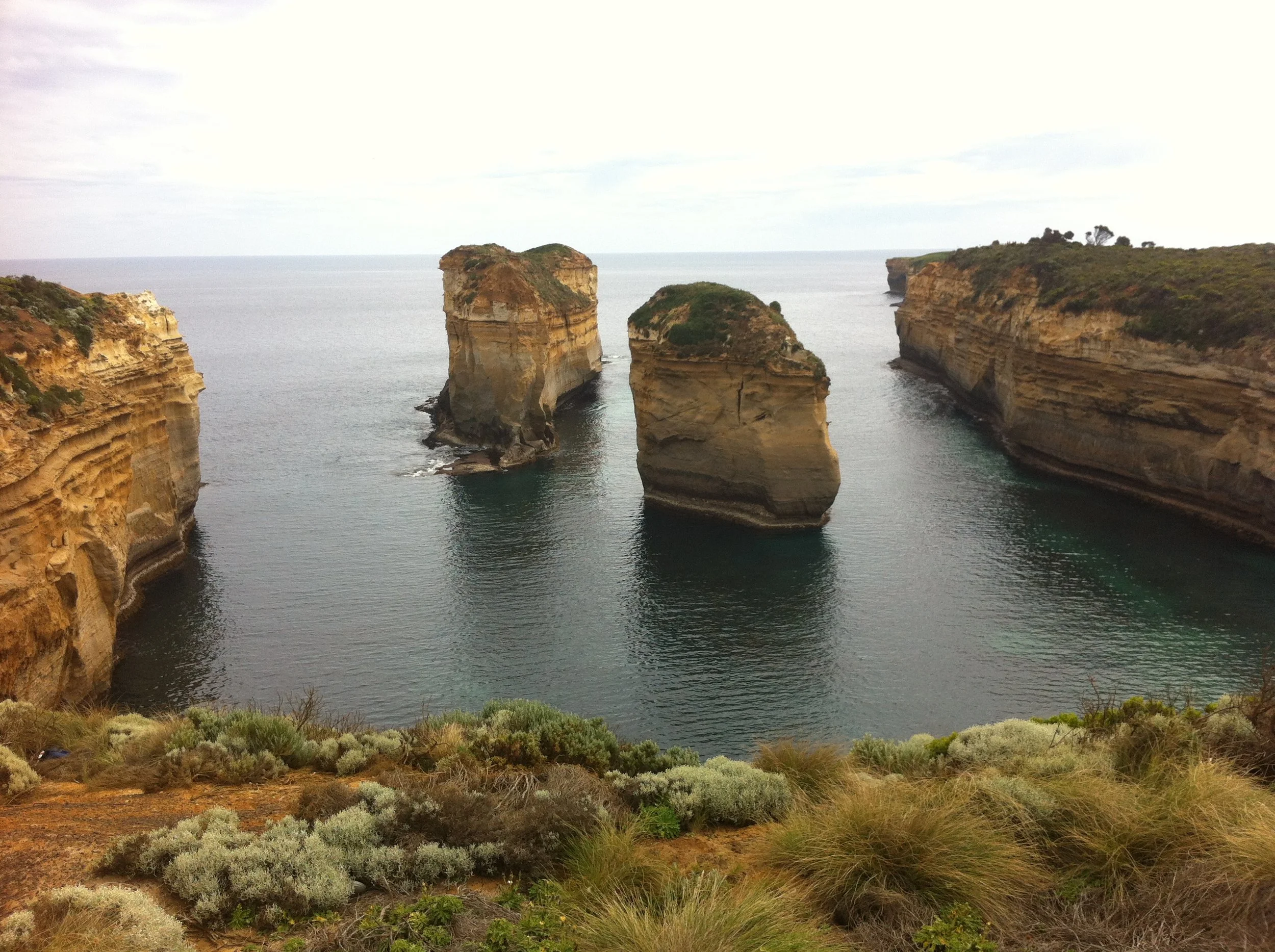
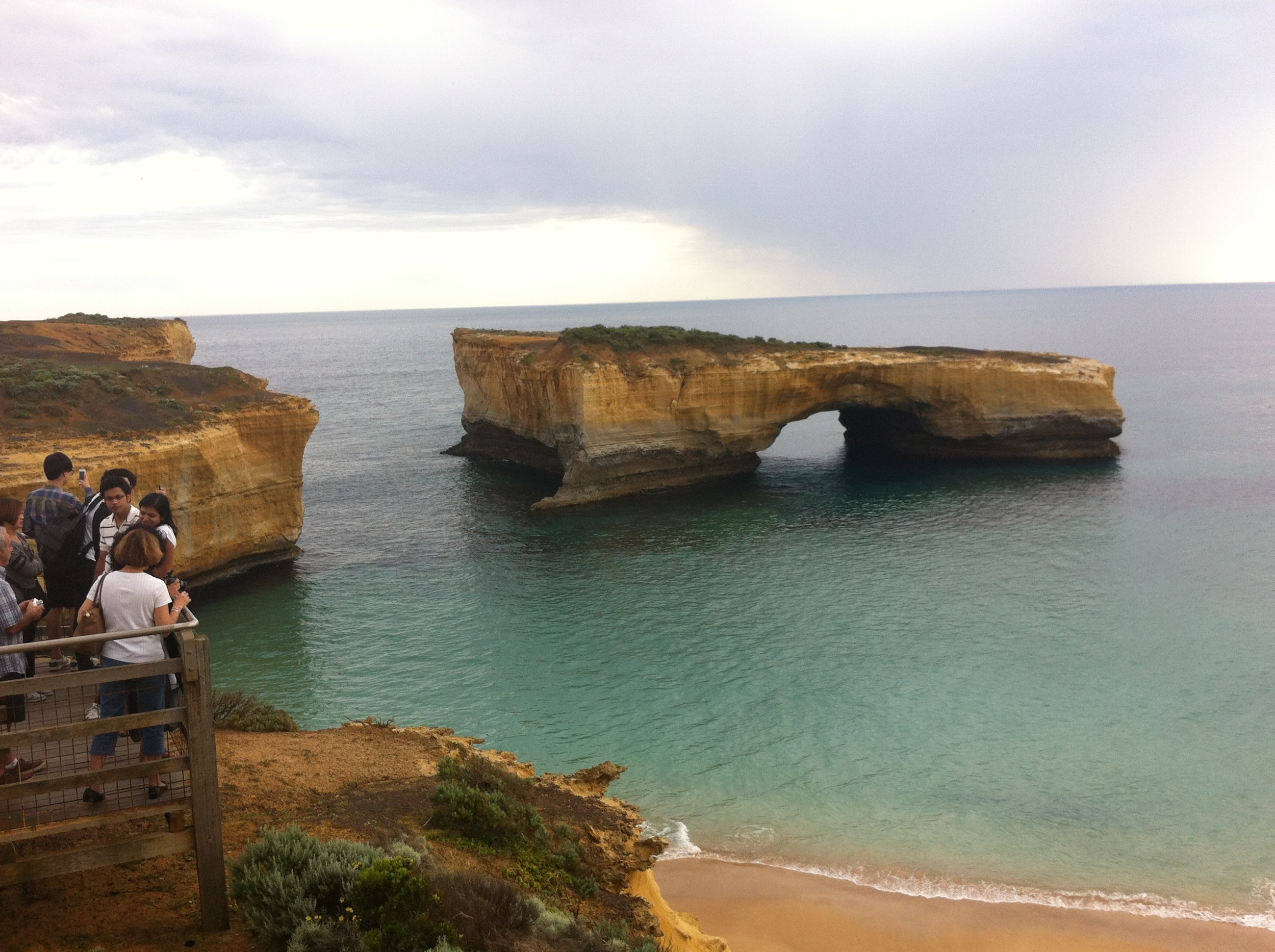
I took this photograph at Loch Ard Gorge while I was living in Melbourne completing my dental degree. My dad had come to visit on his way to my cousin's wedding in Byron Bay, and I suggested we drive out along the Great Ocean Road to see the Twelve Apostles.
I had been before. Once, with friends, I had even seen this coastline from a helicopter. It was spectacular from above.
But this visit felt different.
I think, even then, I knew that the drive itself would be part of the reason for going.
There is something about being beside someone in a car for hours. You don't have to look at one another. The landscape keeps changing. Silence doesn't need to be filled. And somewhere between the ordinary observations, the conversation can quietly wander into the important things.
My dad has always been particularly good at this.
He has a way of reflecting on life that gives his words a certain gravitas—not because he speaks as though he has all the answers, but because he seems to have spent a long time considering the questions. An old soul, perhaps. I think some of my own love for deep conversation began there: those rare exchanges where you suddenly become aware that something important is being said. The air around you almost seems to vibrate with it.
And then we arrived here.
What I don't think I fully appreciated at the time was how much history was held within this beautiful landscape.
Loch Ard Gorge takes its name from the Loch Ard, an iron-hulled sailing ship travelling from London to Melbourne in 1878. It struck nearby Mutton Bird Island with 54 people aboard. Only two survived: teenagers Eva Carmichael and Tom Pearce, who eventually reached safety through the gorge.
The coastline itself had become notorious among sailors. Ships approaching Melbourne had to negotiate a narrow navigational passage between Cape Otway and King Island—an area ominously known as the Eye of the Needle. The surrounding coast contains the wrecks of numerous ships and the graves of hundreds who never completed their journeys.
And all around that human history is an even slower story.