An Ode to Strings
There is something almost alchemical about the sound of a string instrument.
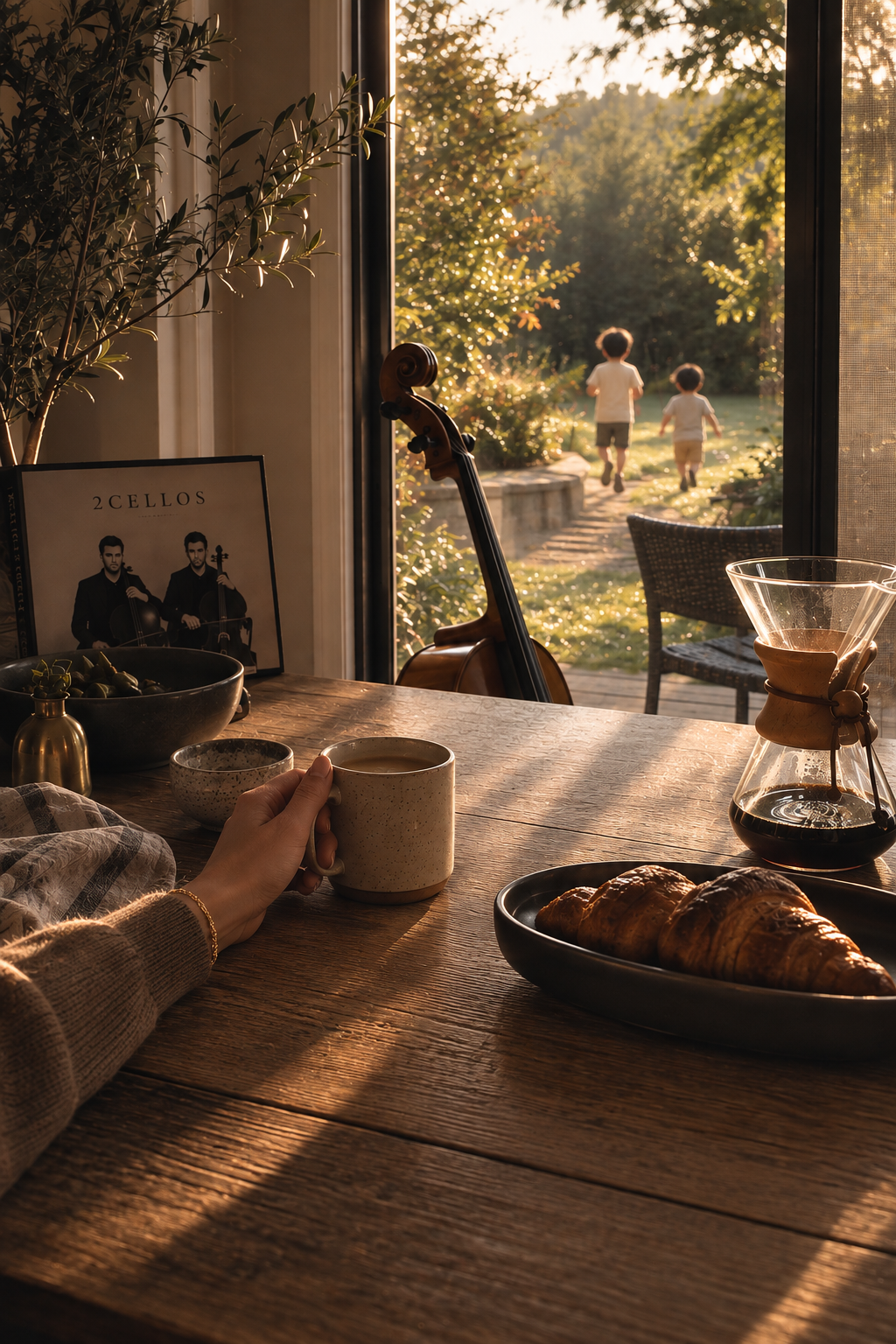
“Castle of Glass” by 2Cellos ↗ (click the image to listen)
The violin emerged in northern Italy in the sixteenth century, refined by generations of makers who learned that the smallest adjustments—to the curve of the body, the density of spruce, the grain of maple, the tension of a string—could alter the character of its voice. Horsehair drawn across a string creates vibration; the hollow wooden body gathers it, deepens it, and sends it outward.
The mechanics are remarkably simple. The result is anything but.
Perhaps that is why strings seem capable of reaching somewhere other music cannot. A familiar melody becomes transportive. A pop song, stripped of lyrics and given instead to bow and string, can suddenly feel contemplative, indulgent, even quelling. The noise around it falls away.
Lately, strings seem to have been finding me.
There was a candlelit evening of Hans Zimmer, familiar scores swelling beneath the flicker of hundreds of candles. Then breakfast at The Sharp in Calgary—an experience deserving of its own pages—where violin music somehow belonged perfectly to the magnificence and simplicity of the room.
But my favourite encounter has become a much smaller one.
On Sunday mornings, my husband has developed a habit of putting on 2Cellos while I prepare breakfast. There was never a conversation declaring this a tradition. It simply happened often enough that, somewhere along the way, it became ours.
The children play. Breakfast takes shape. Outside, morning dew catches the light while neighbours and dog walkers begin trickling along the path behind our garden, quietly entering their own Sundays.
And the cello fills the house.
For a few minutes, everything feels suspended.
2Cellos have always had this particular magic: taking music firmly rooted in the present and revealing something almost timeless within it. Songs we know by rhythm, lyrics and cultural memory become something entirely different in their hands—richer, slower somehow, even when the tempo hasn't changed.
And inevitably, every so often, Despacito surfaces.
Their version played during the civil signing ceremony at our wedding. Now it arrives unexpectedly between coffee and breakfast on an ordinary Sunday morning, years later, with our children somewhere nearby.
The same song.
An entirely different life.
Perhaps this is what makes music so transportive. It doesn't merely remind us of another time. For a moment, it allows two versions of ourselves to occupy the same room.
The bride signing her name.
The mother making Sunday breakfast.
The morning light.
The strings.
Nothing monumental is happening. And yet, when the music finds us at just the right moment, the ordinary becomes almost transcendental.
Perhaps that is reason enough to listen a little longer.